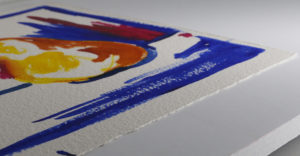
Paper Warping When Painting with Acrylics
When water is applied to paper, the fibers can soak up liquid and expand. This may create the infamous buckles and cockles that can be the bane (or joy) of those who paint with watermedia. This article reports on what happened when High Flow Acrylics and Heavy Body Acrylics were applied to Arches 140 lb. / 300 g.s.m. Cold Pressed Watercolor Paper, Arches 300 lb. / 640 g.s.m. Cold Pressed Watercolor Paper, Strathmore linen finish 400 Series 246 lb. / 400 g.s.m. Acrylic Paper, and a lighter weight Strathmore 300 Series 115 lb. / 187 g.s.m. canvas texture Canvas Paper. These paper choices allowed us to include two weights of professional grade cotton watercolor paper, an intermediate grade buffered wood pulp acrylic paper, and a student grade canvas paper. We found that the two heaviest papers, the 300 lb. cotton watercolor paper and the 246 lb. buffered acrylic paper, tended to dry with greater flatness. Depending upon the needs of the artwork, one of these papers might provide a solution.
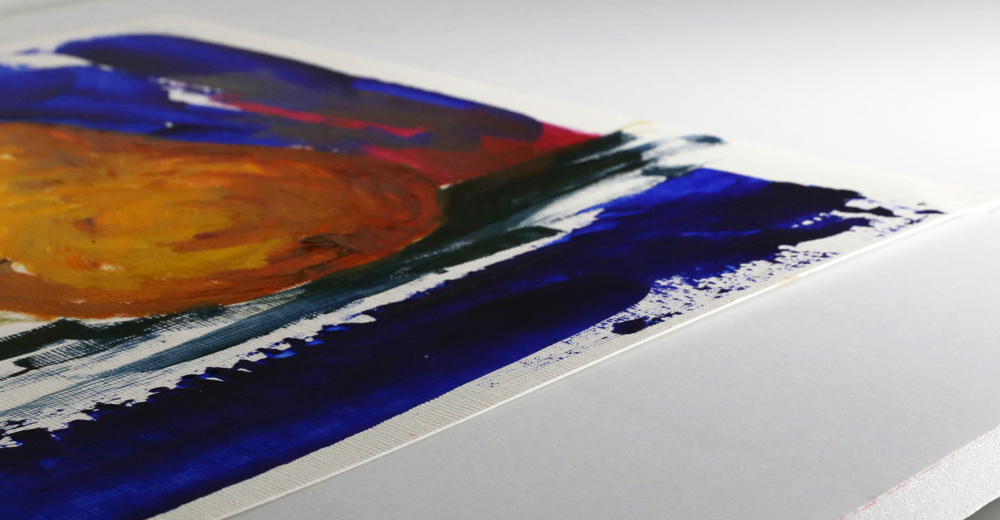
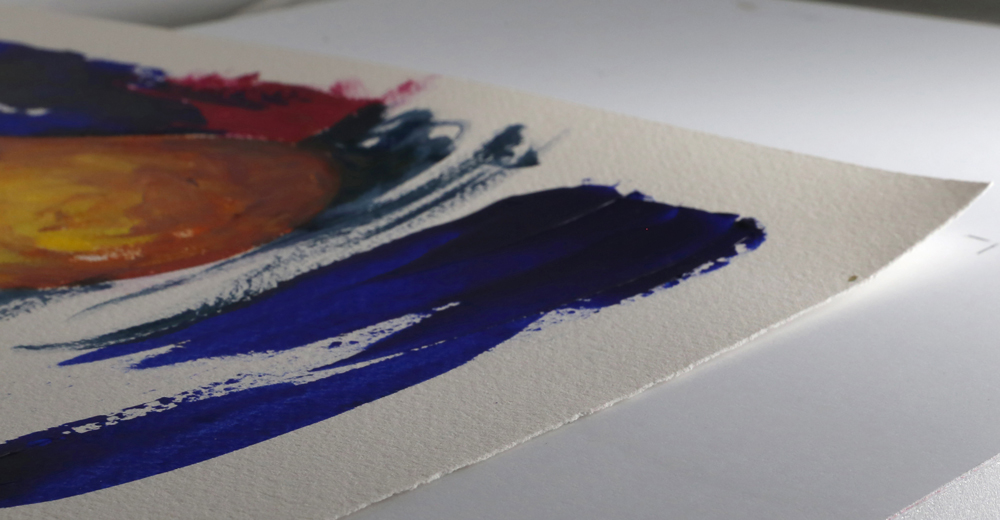
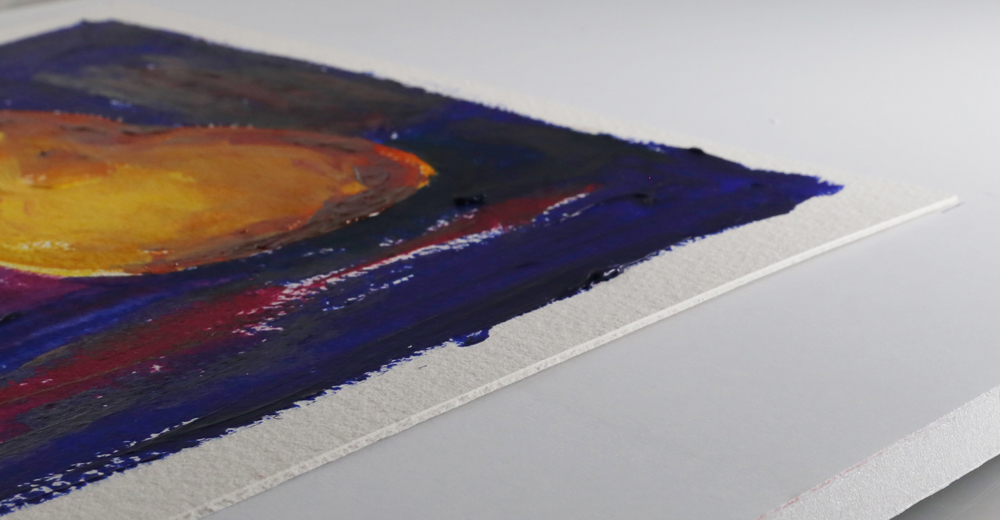
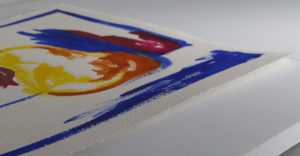
We employed two paint applications. The first used undiluted High Flow or Heavy Body paint and covered more of the paper surface. In our tests, this approach caused the least buckling in the 300 lb. watercolor paper and acrylic paper, both of which remained mostly flat. The 140 lb. watercolor paper showed moderate reaction with low undulations of the surface. The second application process left more of the paper surface uncovered and used either undiluted High Flow or water-diluted Heavy Body. Again, the 300 lb. watercolor paper and acrylic papers showed the least buckling after drying. The acrylic paper tended to curl during painting and dried mostly flat. The diluted Heavy Body paint caused the 140 lb. watercolor paper to buckle more during drying, and the canvas paper to buckle the most during both application and drying.
Fiber content of the paper and sizing help determine the absorbency of the surface. These aspects may affect how a paper will react to water, both initially and in lingering planar distortions after drying. The weight is also important, as the lighter canvas paper curled up the most and the heavier weight papers retained the least buckles. How much water is used, how even the application, and how much of the surface is painted can also be important aspects in the extent and type of buckling.
We found two types of surface distortions were created with the application of water-borne acrylics to the papers: surface undulations in areas with more product or water, and the development of an overall curl to the piece of paper. In general, the watercolor paper was more absorbent, reacted more slowly to the water content of the acrylic paints during applications, and buckled less during painting. Although the 300 lb. paper reacted very little while painting or drying, the lighter weight version tended to develop area buckles during drying. The acrylic paper sometimes reacted by curling during paint application, however it tended to flatten out while drying and was not as prone to localized buckling.
It is always good to test a new paper to see how it will react with your painting techniques and materials. Remember that acrylics are water-borne paints, and even undiluted applications might cause buckling on some papers.
Heavier Paint Applications, Heavy Body
|
|
|
|
Heavier Paint Applications, High Flow
|
|
|
|
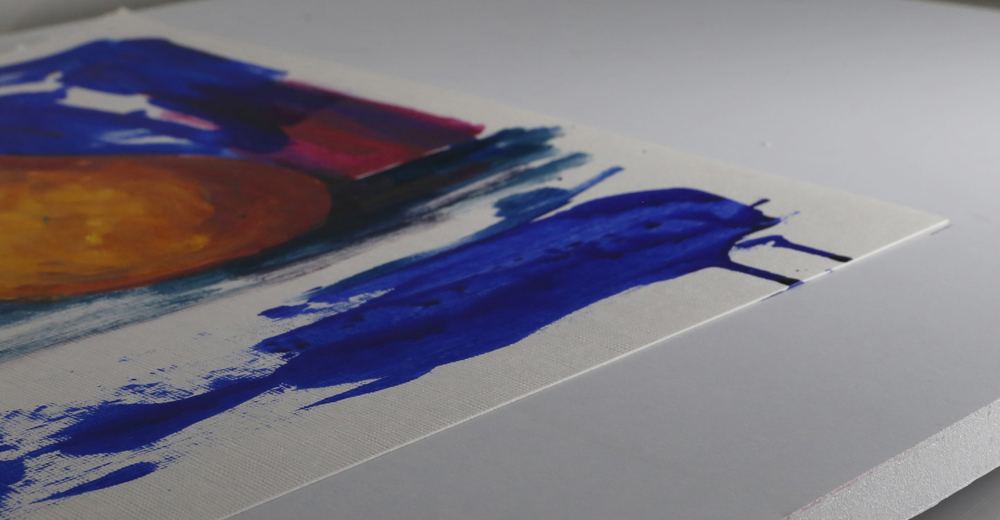
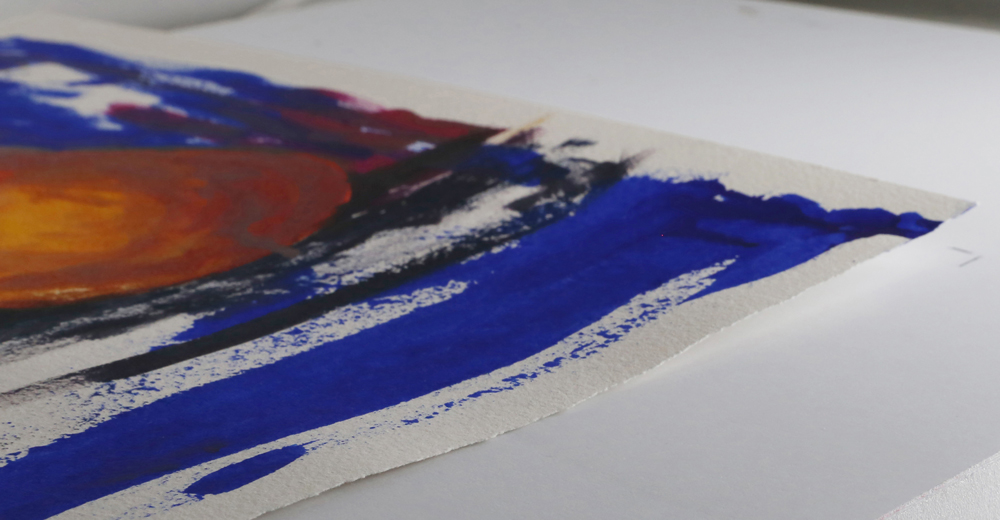
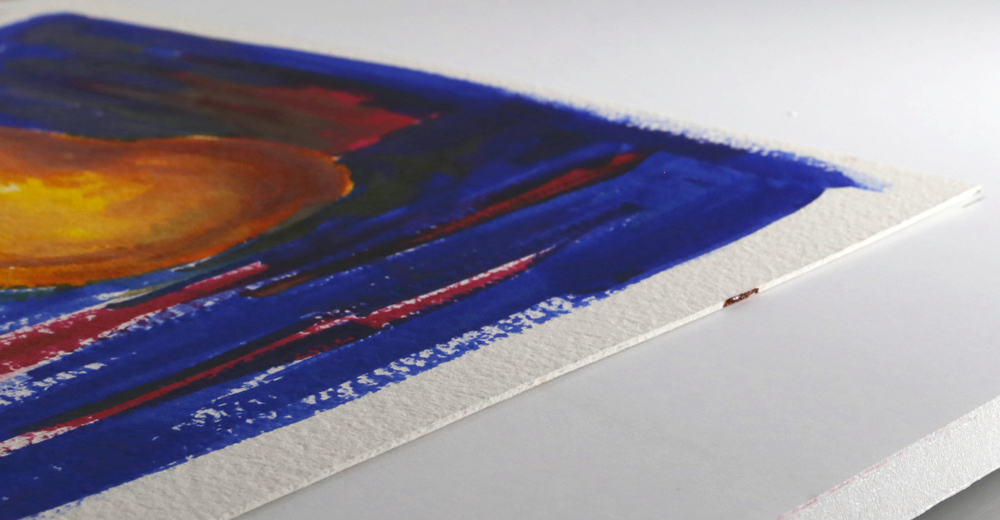
Lighter Paint Applications, Heavy Body diluted with less than fifty percent water
|
|
|
|
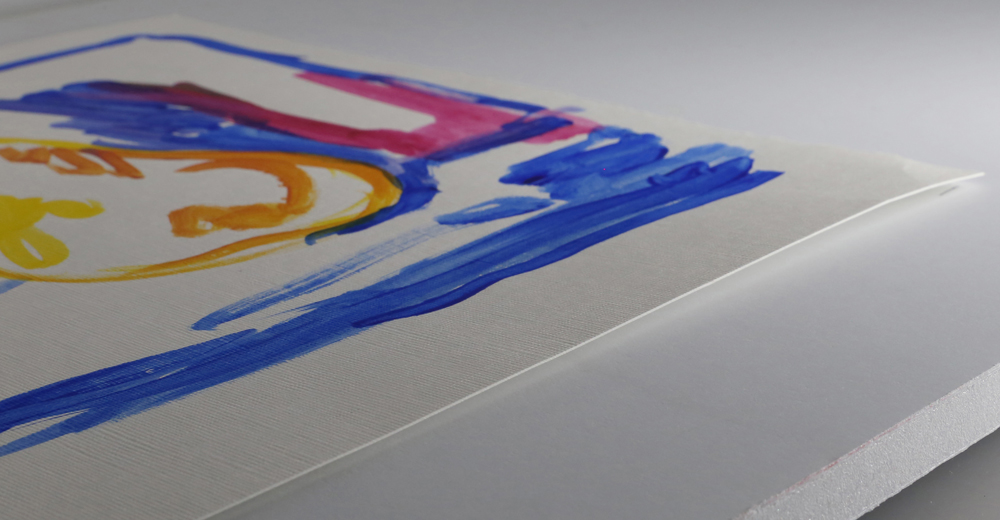
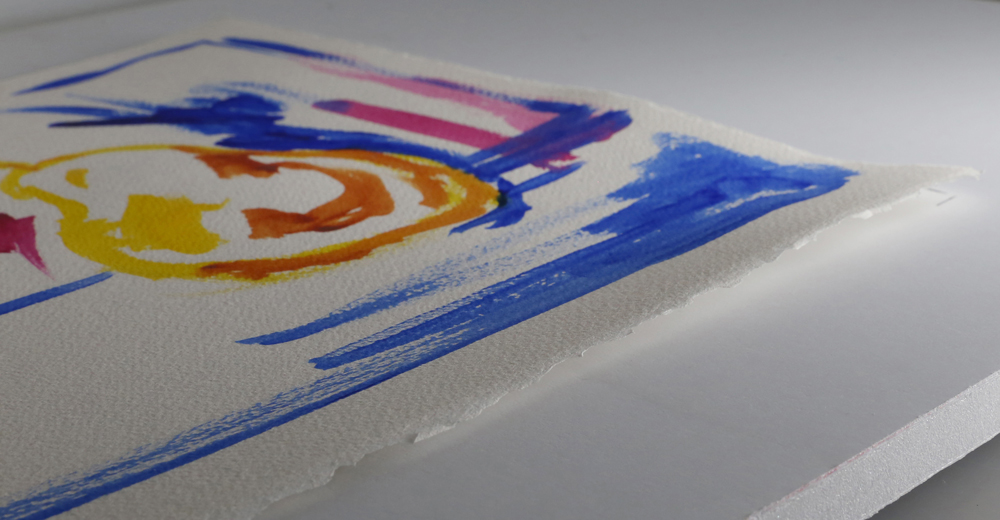
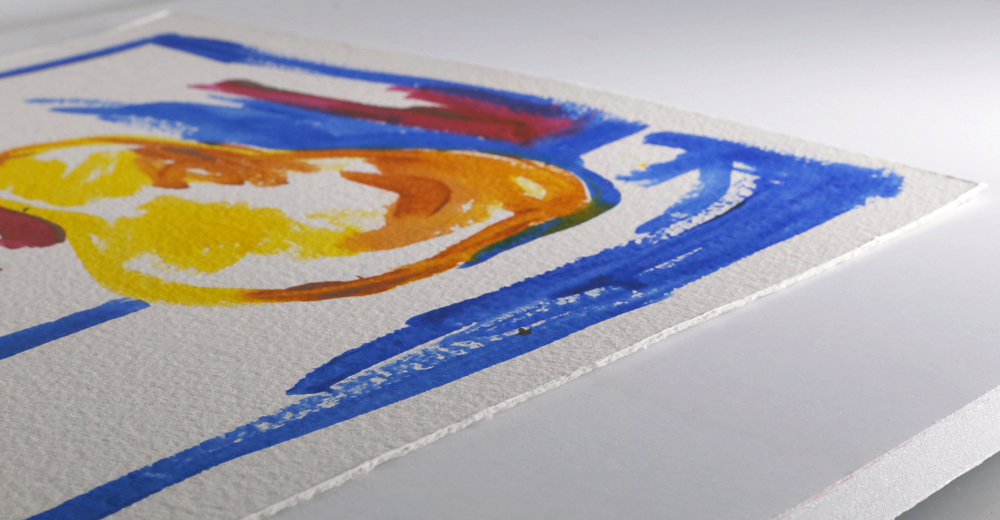
Lighter applications, High Flow
|
|
|
|
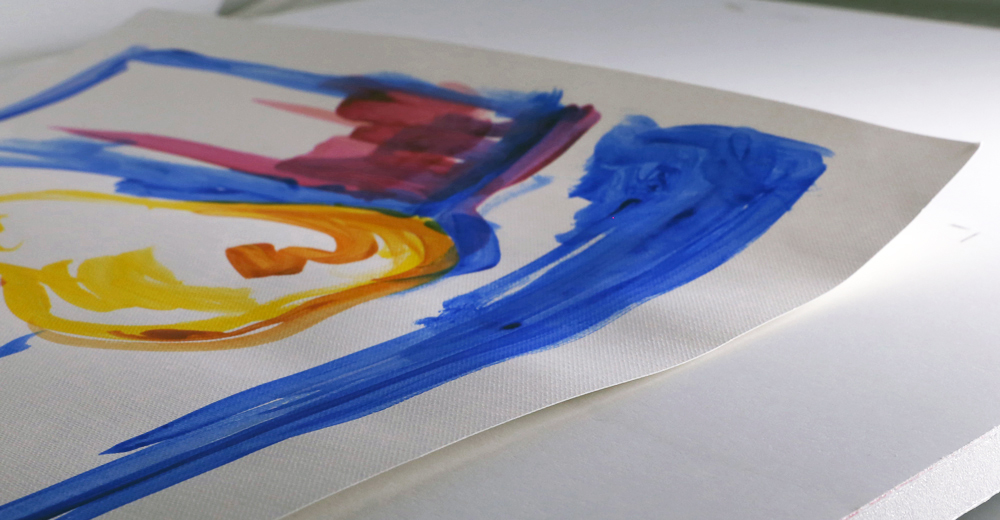
|
|