
Painting with Oils on Paper
Editor’s Note:
Added April 26, 2022
For some time, our recommendation for artists using oils over acrylic has been to work over harder, matte acrylic surfaces and avoid working on softer gels and gloss products. Our intention was to optimize the level of adhesion that would be achieved on a toothier surface as well as avoid the potential for future cracking as the oil paints become more brittle. While we have not seen adhesion problems of oils on any type of acrylic, recent testing has shown the potential for cracking in certain instances and conditions when applying artist oils over all of the many brands of glossy acrylics we have tested. While we have not received notice from artists of this phenomenon, we are able to repeat this specific type of cracking in our Lab.
Please visit https://justpaint.org/revising-our-recommendations-for-using-oils-over-acrylics/ for an overview of our testing, results and updated recommendations for applying oil colors over acrylics.
For oil painters who find themselves eager to paint but reluctant to spend too much time or money on surface preparation, you might try working on paper. Paper can be reasonably priced, easy to prepare and less formal than panel or stretched canvas. If prepared properly and maintained with longevity in mind, paper can be a permanent substrate for sketches, studies and finished oil paintings.
Paper, like other natural fiber substrates such as linen or canvas, needs to be sized or primed before oil painting. Sizing protects the fibers from oil absorption, which can cause premature darkening, embrittlement and eventual degradation of natural fibers. The challenge of sizing paper is keeping it from warping. We have recently tested various ways to size paper, looking for products that both protect from oil absorption and cause the least warping. For this test, we used untaped and unstretched Arches® 140-pound, hard sized watercolor paper and Arches® Oil Paper. Oil Paper is specially formulated for use with oil-based media and requires no preparation before use. Since it is already sized, additional layers of acrylic product, Acrylic Gesso or Oil Ground can be used to reduce tooth or brush drag, but are not required to protect against oil absorption. The acrylic products we tested on Oil Paper caused very minimal to no warping and we saw no signs of oil absorption. Of the product we tested on the 140-pound watercolor paper, Fluid Matte Medium, Acrylic Gesso, Airbrush Transparent Extender and Matte Medium caused the least amount of warping. These products resisted oil penetration with two or three coats.
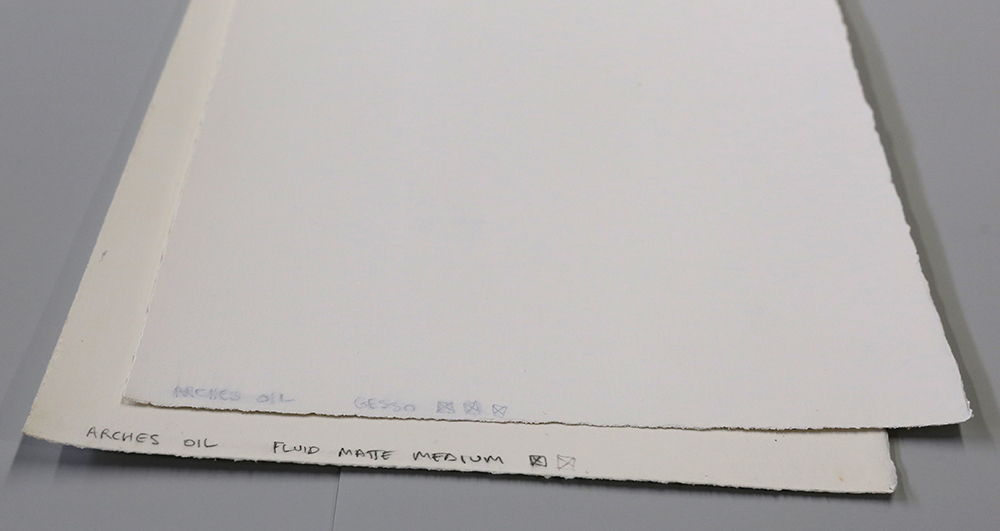
Image 1: Best results with no oil penetration and minimal warping – Fluid Matte Medium and Acrylic Gesso on Oil Paper.
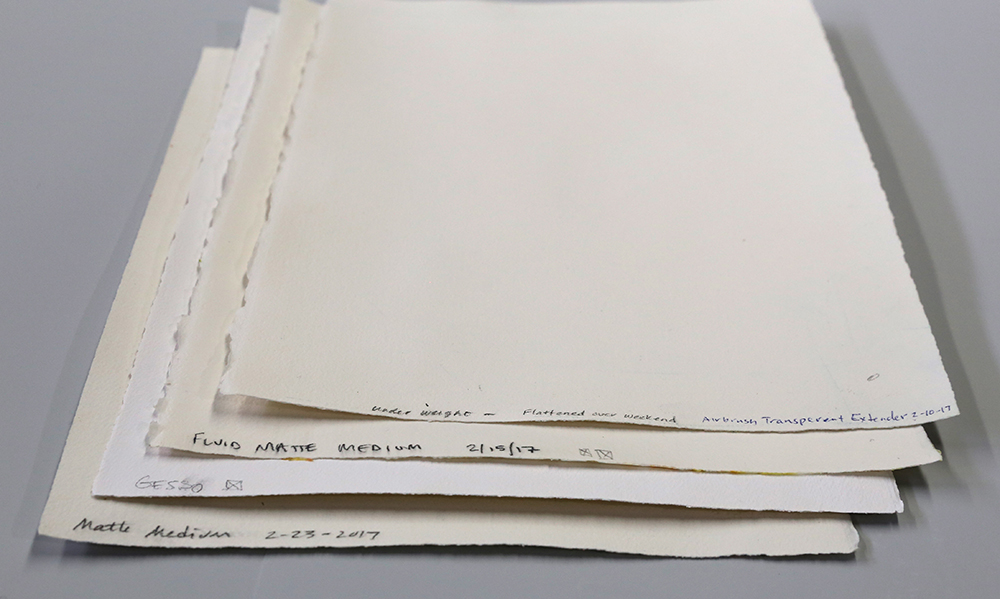
Image 2: Good results with several coats – Fluid Matte Medium, Acrylic Gesso, Matte Medium and Airbrush Transparent Extender on 140-pound watercolor paper.
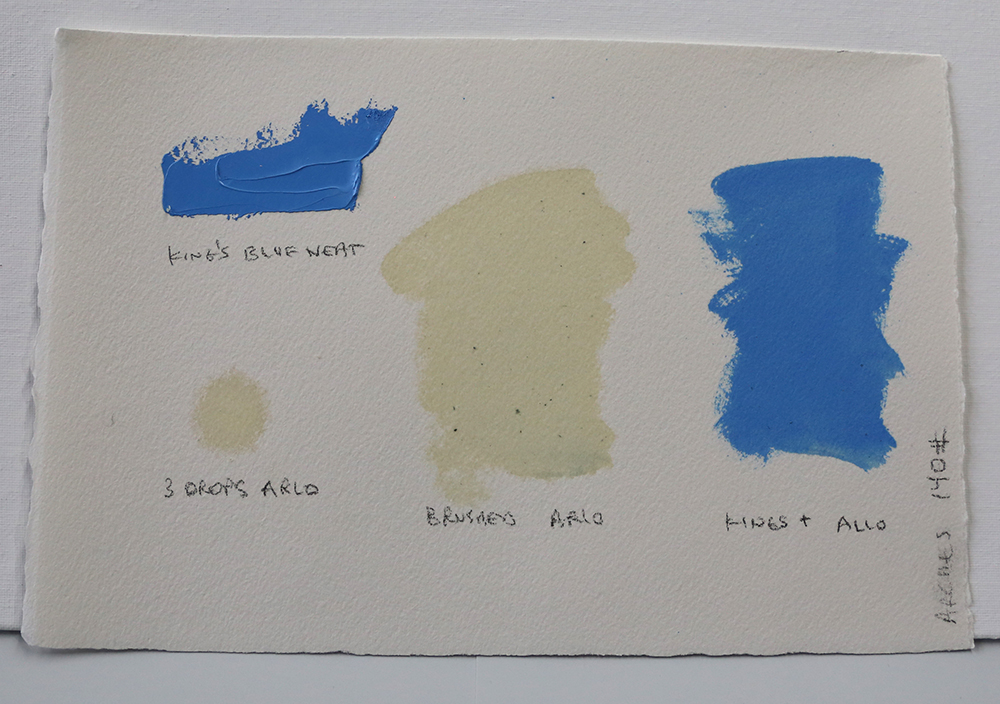
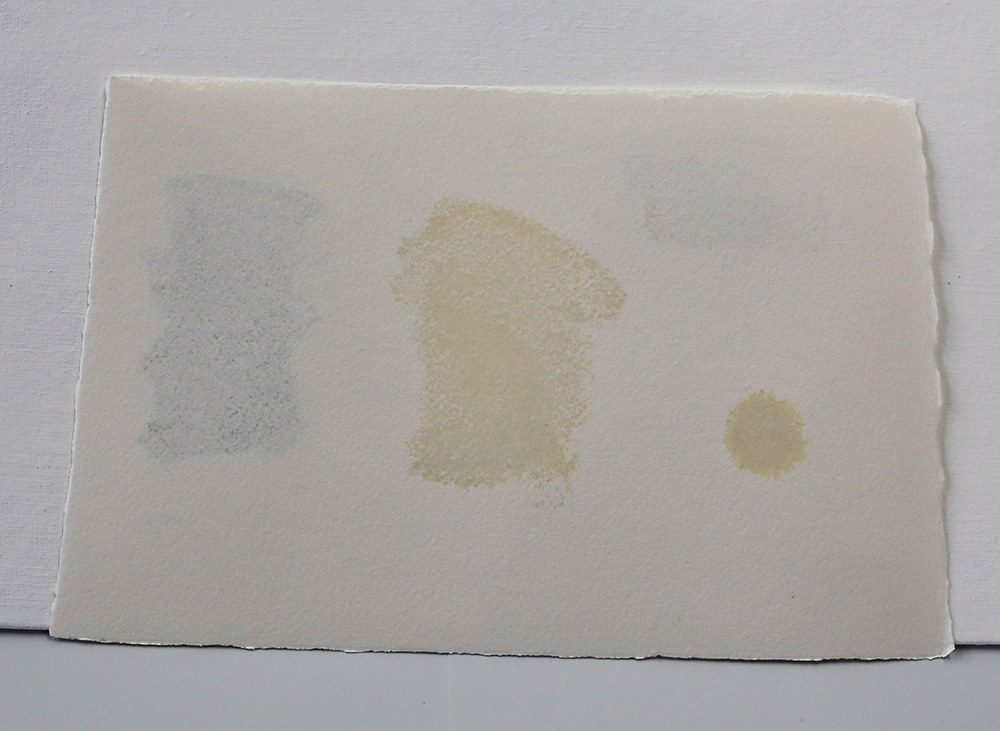
Images 3 & 4: Oil Absorption Test on unsized 140# watercolor paper: front side (Left) shows 3 drops of Alkali refined linseed oil, brushed oil, King’s Blue neat and King’s Blue thinned with oil, back side (Right) shows oil penetration. Similar tests performed on Oil Paper, Oil Paper with acrylic product and 140# watercolor paper with two or more coats of acrylic product showed no oil penetration.
We recommend smoothing the paper as much as possible between coats so as to not reinforce the curling with additional layers of acrylic. We found that gently running the paper over a table edge to oppose the warping or pressing the paper left it relatively flat. The final layer of priming should ideally be matte for increased tooth and porosity. We recommend allowing at least three days for acrylic products to fully dry before painting on them with oils.
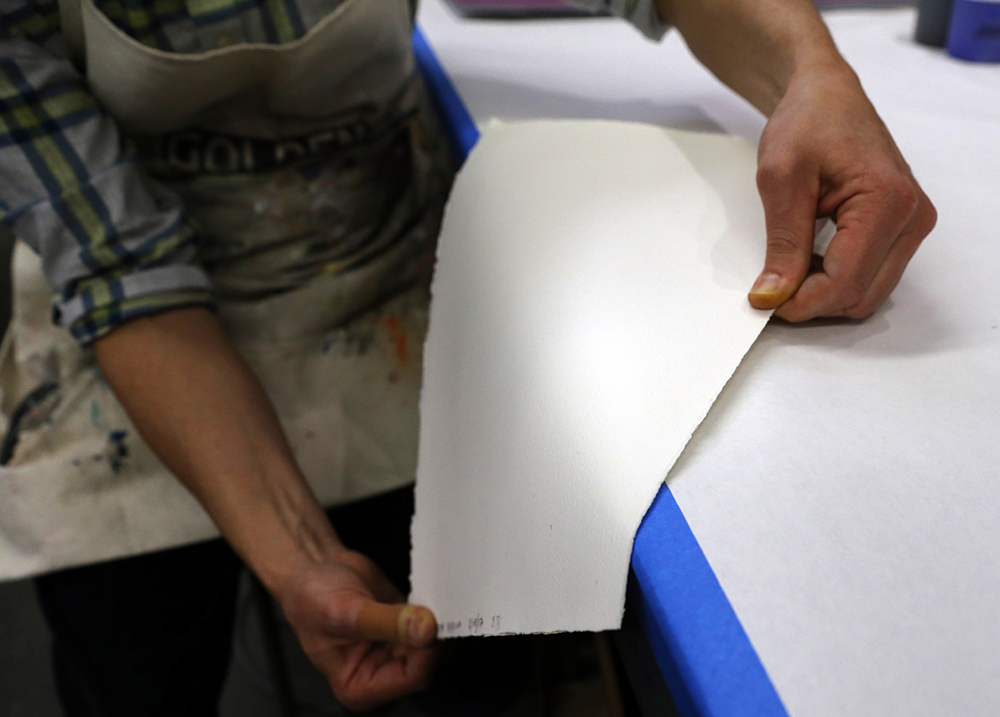
Image 5: Running paper over the table’s edge to oppose warping
There are pros and cons about working on paper. Some positives are that paper can be shipped flat or gently rolled around a tube and can be stored in a flat portfolio. For exhibition, works on paper can be adhered to panel or matted and framed under glass. The negative for paper is that it is fragile and will expand and contract in response to changes in humidity. As oil paint becomes older and more rigid, this movement, as well as any flexing of the paper, can cause cracking. Paper can also tear and retain the memory of folds or creases. Heavy applications of oils are not recommended for paper without proper reinforcement.
All substrates have their strengths and weaknesses and paper is no exception. In the end, paper is a good choice for those who are looking for an economical substrate that is relatively easy to prepare. Paper is great for landscape painting or studies done outside the studio.
For another look at a previously published Just Paint article about Preparing Canvas for Oil Painting, visit: http://justpaint.org/preparing-a-canvas-for-oil-painting/