
Painting with GOLDEN on a Budget
If you’ve ever wondered where it makes sense and is safe to cut corners on art supplies, while maintaining a high standard and ensuring longevity of your artwork, this article is for you. We’ll share a few simple tips on how you can make the most of your art supply budget while using professional artist grade materials.
Limit Palette to Low Series Colors
All GOLDEN paint lines are grouped into 9 distinct Series, which are price categories, depending on the cost of the pigments used in each color of paint. Series numbers can be found on paint labels and in our online color charts (Heavy Body, Fluid, High Flow, SoFlat). Using a limited palette with colors in the low Series, for instance 1-3, is a great way to start reducing costs.
- Series 1-3 palette list
- Primary colors & visuals
-
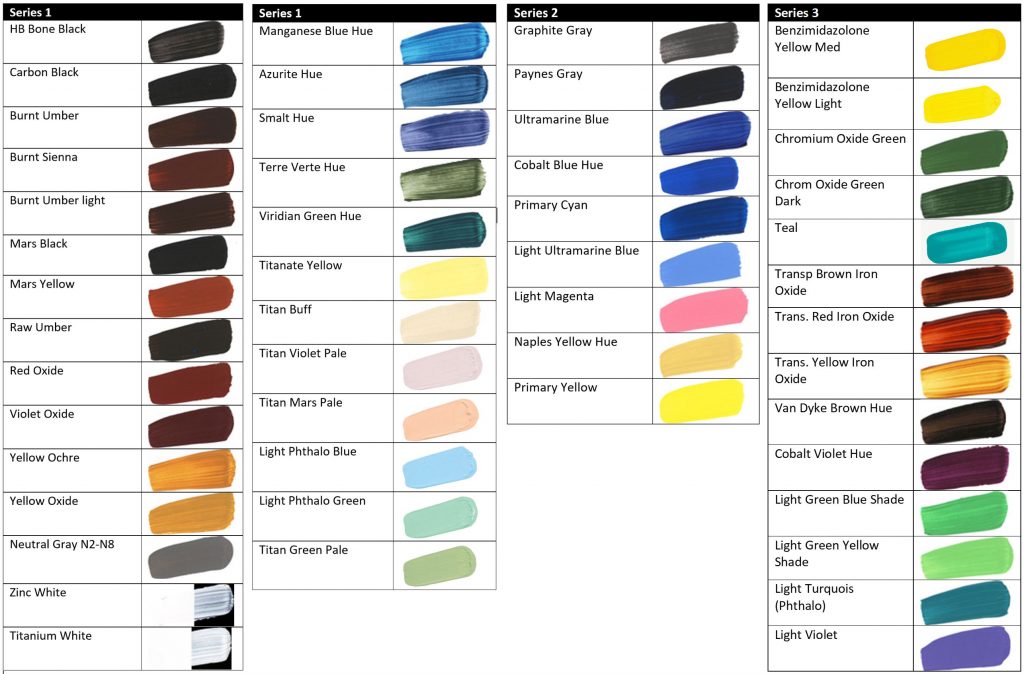
Series 1 -3 colors
Using a limited palette has many benefits: it helps improve color mixing, since one is forced to mix hues rather than reaching for a paint tube that is ‘pretty close’ and it is easier to keep control over color temperatures using fewer pigments.
Stretching Paint
Although you can get such an amazing variety of less expensive pigments through series 3, you may need to also invest in higher series colors. For example, the first three series, have no real bright reds. You can still paint on a budget by picking up one or two of the more expensive colors and simply extending them with acrylic mediums. While other manufacturers may use non-colored materials like chalk and barium sulfate to bulk their student grade paints and thus lower the price of manufacturing, our concern is entirely with the function and quality of the product. Therefore, GOLDEN paints are usually on the higher end of the price spectrum. Stretching paints with mediums and pastes basically allows you to create your own student grade paints, which are simply paints mixed with large amounts of filler; only now you have the additional benefit of having full control over pigment load, transparency and consistency of the paint. A student grade paint cannot be turned into an artist grade paint, but an artist grade paint can be stretched into a student grade one to whatever extent you choose. All GOLDEN Mediums, Gels and Pastes have been tested for compatibility with all our paint lines. Products that are particularly suitable for stretching paints would be:
| Clear Mediums | Gloss Medium, Glazing Liquid, GAC 100, GAC 500, Fluid Matte Medium |
| Clear Gels | Soft, Regular, Heavy, Extra Heavy Gel |
| Opaque Pastes | Molding Paste, Extra Heavy Molding Paste, Fine Pumice Gel |
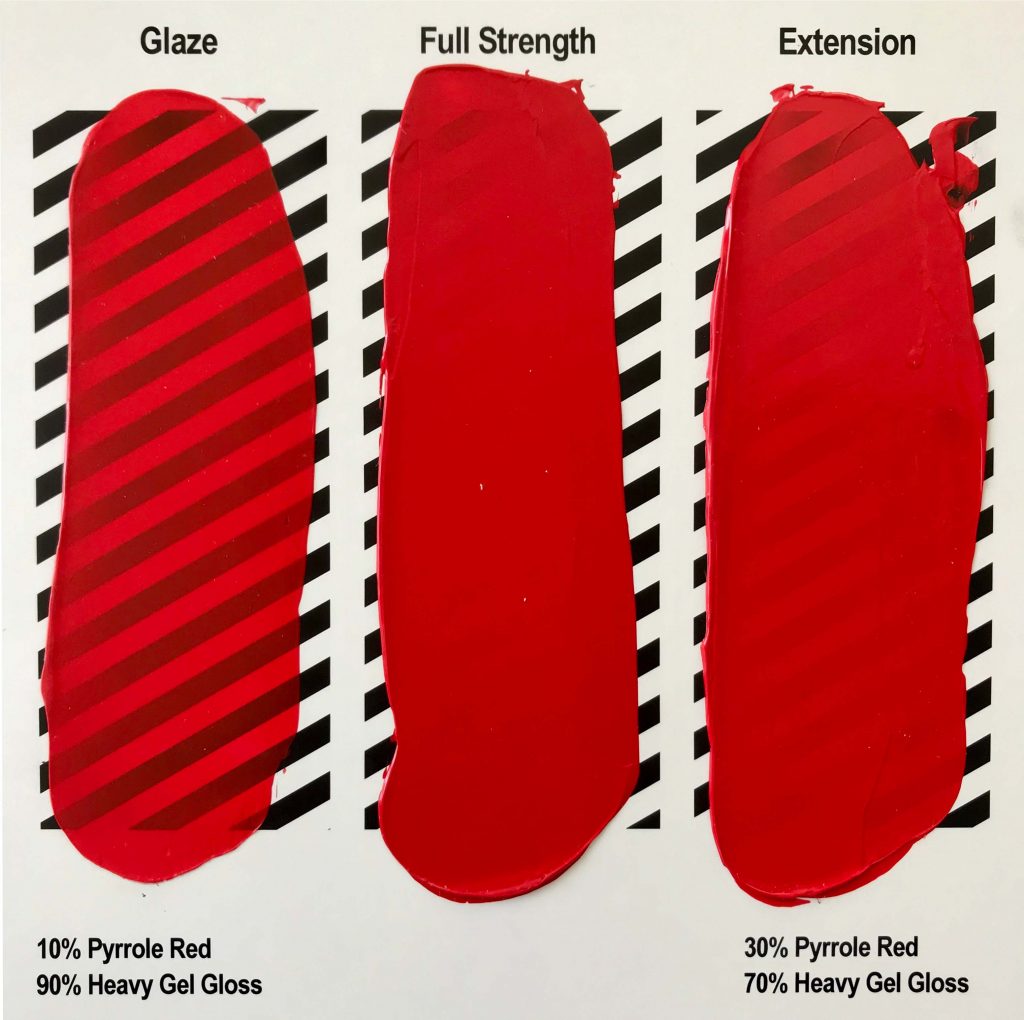
Stretching paints with mediums, gels, pastes, or water is a great way to make your paint go further and teasing out the subtleties of undertones. Below is an example of Heavy Body Pyrrole Red being stretched with Heavy Gel Gloss to a translucent glaze using 90% Gel. An addition of 70 % Gel still creates a semi-opaque paint layer.
For more information on how GOLDEN mediums, gels and pastes work, please review the following videos:
- What, Why & How: Painting with GOLDEN Fluid Acrylic Mediums
- What, Why and How: Painting with GOLDEN Acrylic Gel
- What, Why & How : Painting with GOLDEN Pastes
Product Sizes & Product Care
Buying larger containers of your staple products is economical and this applies to all product categories. GOLDEN products have no expiration date and to help you enjoy them until it’s all used up, we have an article for you on product care here.
Palette Management
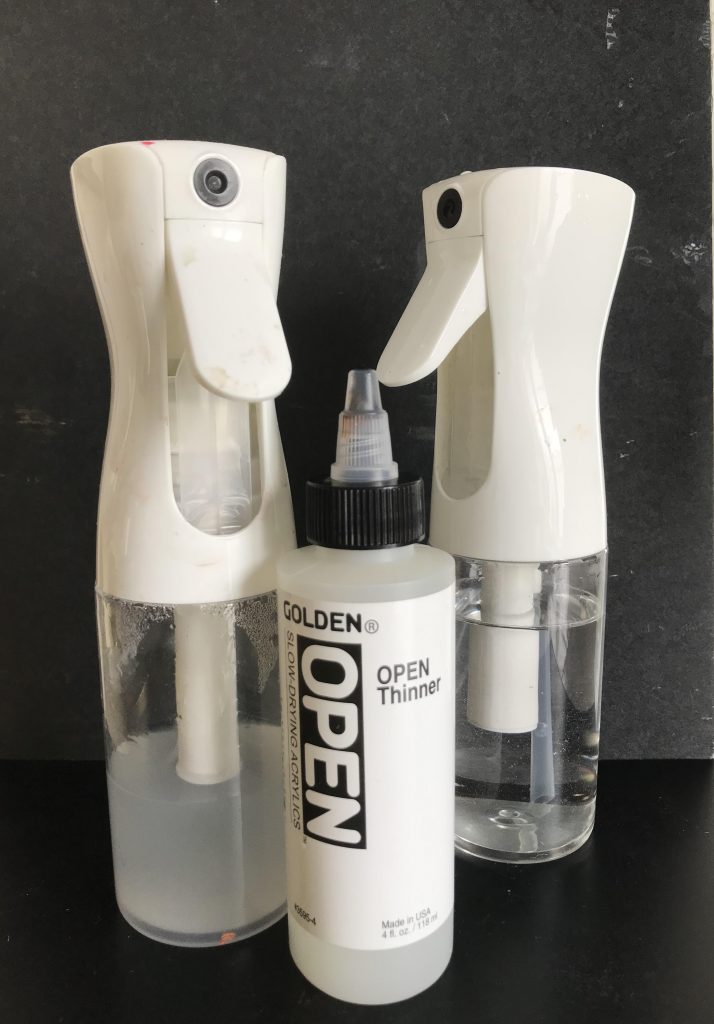
Reducing dried out paint on the palette is another easy way to save a little. During painting sessions the palette can be spritzed with a spray bottle or atomizer filled with water and some OPEN Thinner, or just water. Distilled water will reduce the risk of bacterial growth and OPEN Thinner will retard the drying process. Depending on the type of spray bottle, the amount of water needed to dilute the OPEN Thinner can vary. Start with 30% water and add more water until it sprays smoothly. Rather than transferring paint from the palette back into paint containers at the end of a painting session, cover the palette with a plastic wrap and store in an airtight bag or box. Alternatively, use the paint to create practice paintings that can be used later on for experiments.
Substrates
Substrates for painting can range significantly in price and you might want to paint on scrap pieces that you have lying around in your house or studio as well. When we work on scraps we’re often relaxed, because we’re just playing around and having fun. That can show in the work and, wouldn’t you know it, it can turn out to be some of our best work! Then we might wish we had used a proper support. The most common issue with inadequate substrates is adhesion failure. Therefore we recommend coating cheaper pre-primed canvases or canvas boards with a layer of GOLDEN Acrylic Gesso and possibly give the surface a light sanding beforehand. Archival paper is a great substrate for sketches, as it is durable, easy to store, inexpensive and if desired, it can be mounted to a canvas or panel later. You might also recycle all sorts of materials as well. Take a look at our JPE How do I paint on ______? Preparing Surfaces for Painting for brief preparation guidelines.
Conclusion
Making time to paint can be hard enough for some of us. So, when we finally do get some studio time, it’s nice to be able to enjoy it with high quality materials. Nonetheless, we are convinced that creativity can and should be expressed with all possible means, regardless of budget. We hope these tips will help you make the most of your art materials. Leave a comment or send an email to help@goldenpaints.com if you have questions or want to share your own studio hacks.