
Alternatives to Discontinued Quinacridones
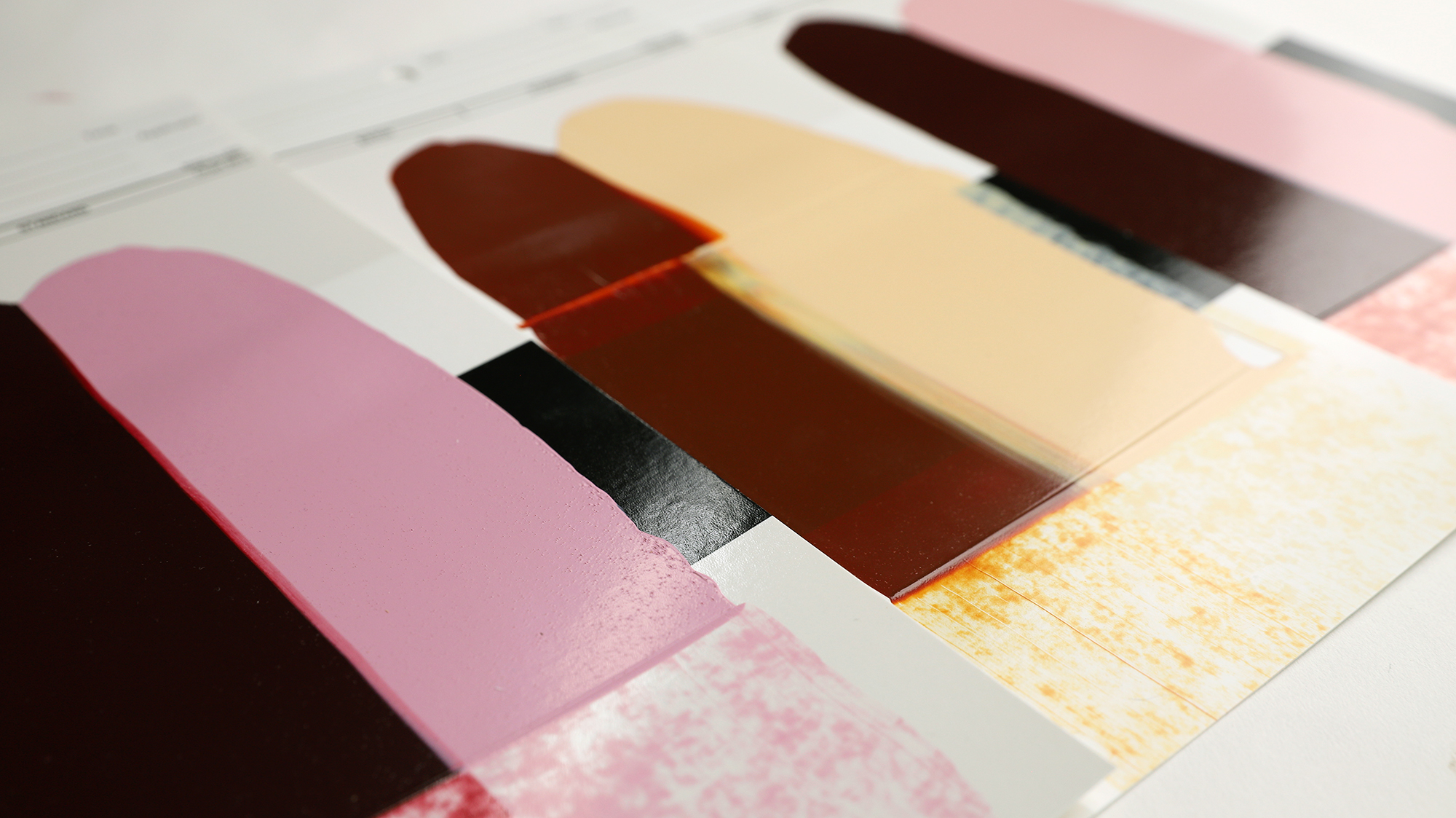
“Discontinued Color”: A phrase artists never want to hear!
A pigment is “discontinued” most likely, when a pigment manufacturer ceases production. In turn, this creates a ripple effect in the artist industry. Sometimes we can locate another manufacturer that offers the same pigment. Often, we cannot. Unable to find another source, we are forced to discontinue some beloved paint colors. This is the case with (PR206) that we call Quinacridone Burnt Orange. Not only is this fiery and versatile pigment used to make one color, but it was also a key component in making Quinacridone/Nickel Azo Gold and Quinacridone Crimson.
These three colors were produced in most of the GOLDEN Acrylic Paint lines, QoR Modern Watercolors, Williamsburg Handmade Oil Paints, and many other artist materials manufacturers.
The loss of these three “quins” creates a hole in our color offerings and as artists run low on these colors, they’ll need paints with similar properties. Our R&D Laboratory and Material & Application Specialists are actively working on replicating these colors as closely as possible, employing both pigments we already have in-house and others that we are bringing in to evaluate their potential. While we may be able to match some aspects, there is often a compromise of these properties with an emphasis on the most critical ones. These colors were known for their rich undertones resulting in vibrant glazes and washes, so this attribute takes center stage.
Mixing a Quinacridone Burnt Orange Hue
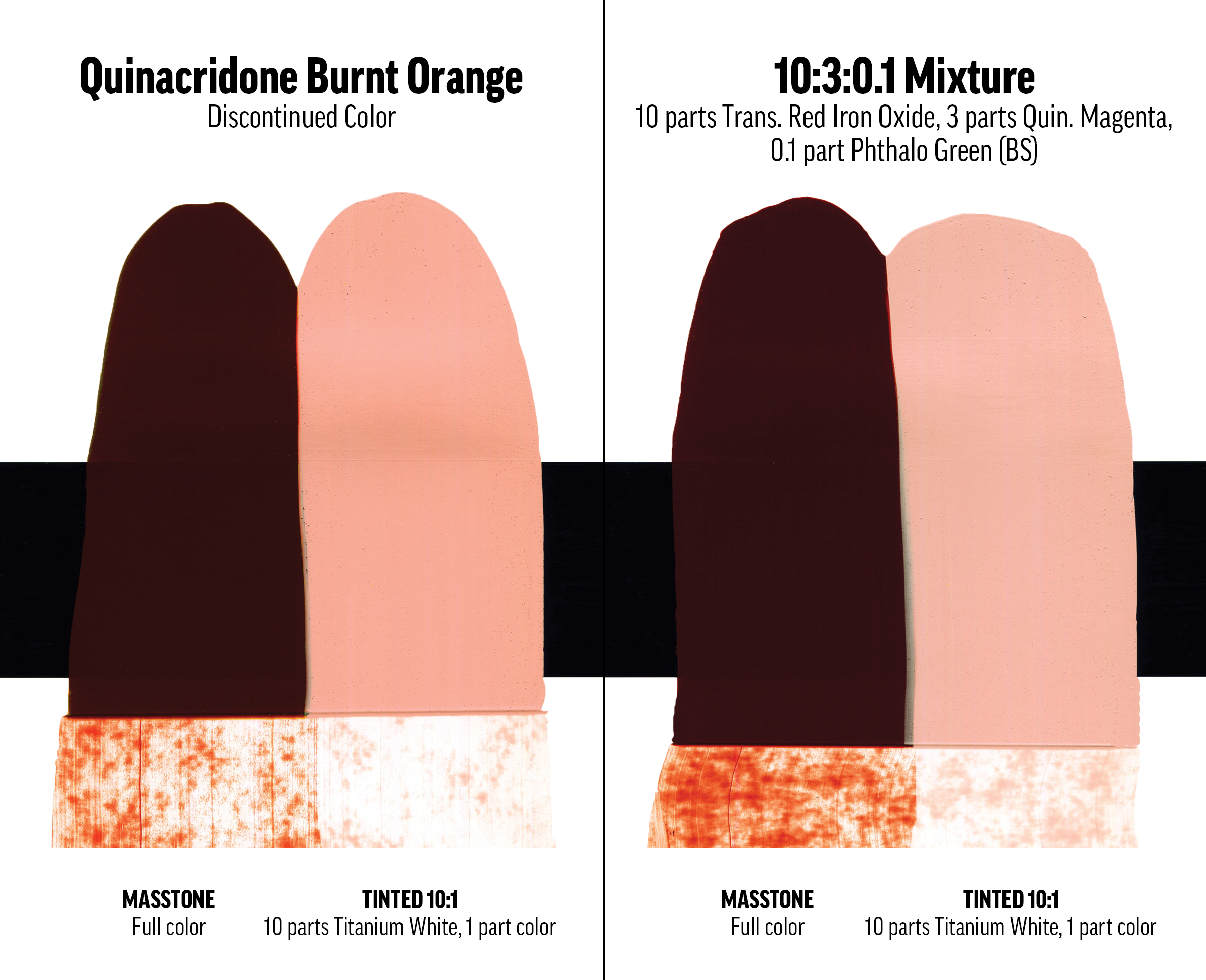
Quinacridone Burnt Orange (PR206) is where we will start because it can be used to recreate the other two paints. The most direct approach is to start with Transparent Red Iron Oxide (PR101) as a base and add Quinacridone Magenta (PR122) at a 10:3 “parts” ratio. This mixture is then deepened with a very small amount (0.1 parts) of Phthalo Green Blue Shade (PG7).
Mixing a Quinacridone/Nickel Azo Gold Hue
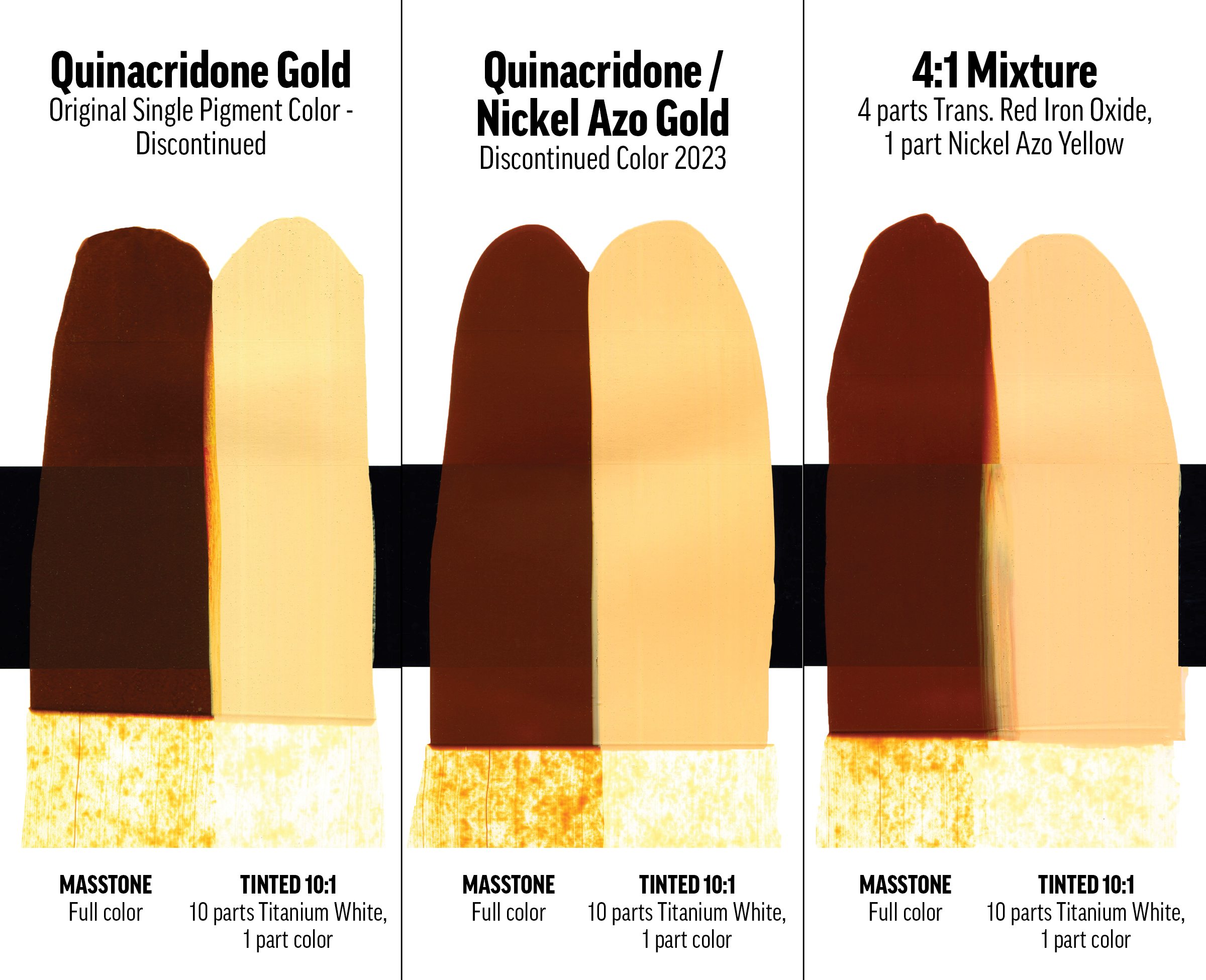
Quinacridone/Nickel Azo Gold. This color has had a history of change that began over 20 years ago. When Golden Artist Colors opened its barn doors in 1980, Quinacridone Gold (PO49) was a popular single-pigment paint. But in the 1990s, the pigment manufacturers ceased production of the specific variant we were using. Thankfully, there were other PO49s still being produced. We settled on one that was just a bit greener and combined it with PO48 used to create the new Quinacridone Gold in 1994. Since it was a blend of two quinacridones, we kept the original name.
As you may have guessed, we then lost the alternative PO49. Our R&D Lab came up with a new formula, but we had to rename this version to Quinacridone/Nickel Azo Gold. Nickel Azo Yellow (PY150) is also a vital pigment for other colors such as India Yellow, Hookers Green, Sap Green (Hue), and Green Gold.
This current mixture pairs Transparent Red Iron Oxide (PR101) with Nickel Azo Yellow at a 4:1 ratio. You can increase Nickel Azo Yellow if you want to bump up the undertone brightness.
Mixing a Quinacridone Crimson Hue
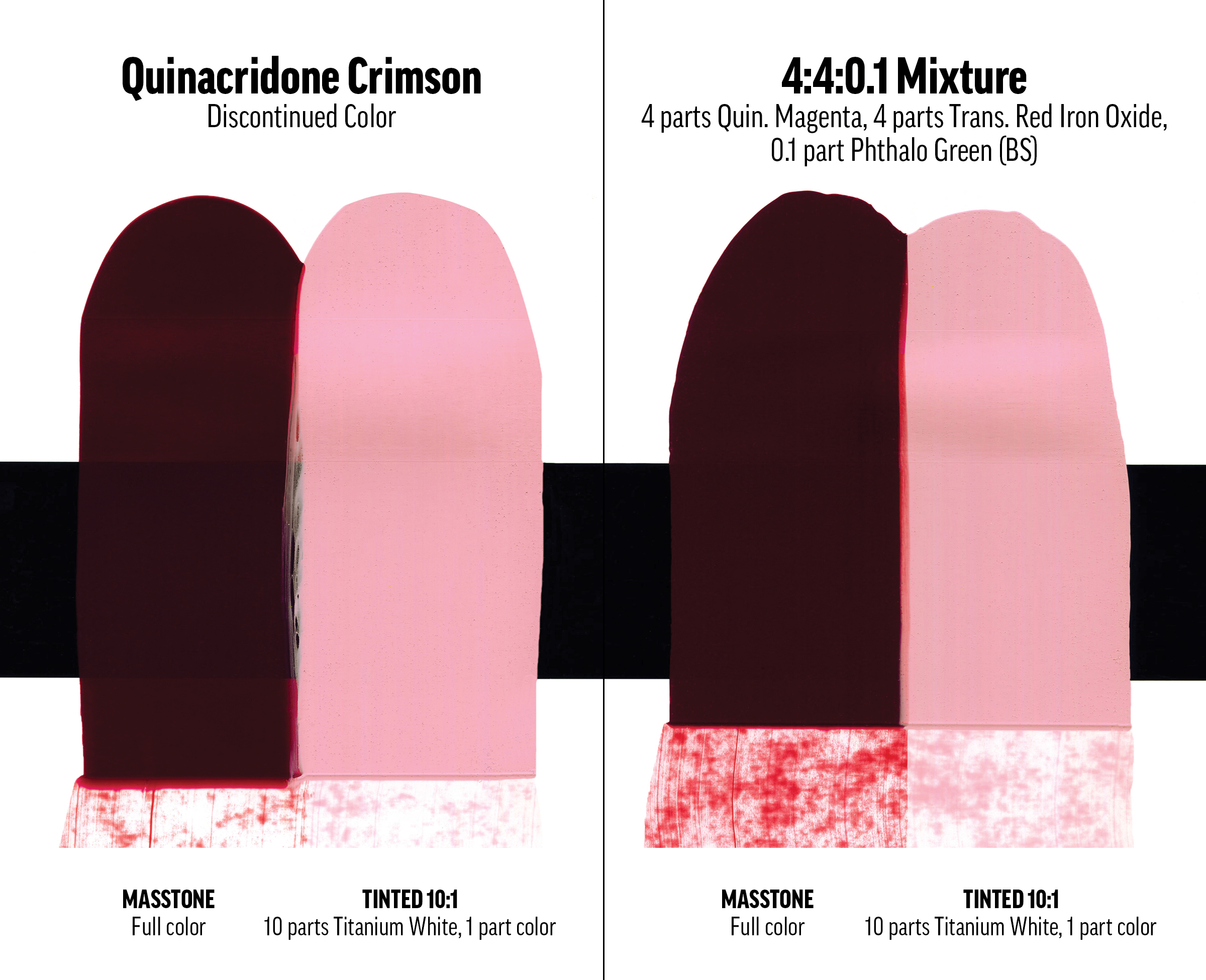
Quinacridone Burnt Orange was used in Quinacridone Crimson, originally a blend of (PO48) and a quinacridone pigment (PR202) similar to our Quinacridone Magenta (PR122).
Quinacridone Magenta mixed with Transparent Red Iron Oxide – and just a touch of Phthalo Green Blue Shade (by weight, 4:4:0.1) results in a satisfactory crimson. Adjust the Phthalo Green Blue Shade to deepen your mix as desired.
How will you replace these colors on your palette?
We will continue looking at our several options that will allow us to replace these lost colors and which pigments give us the best alternative mix. We may try to recreate all three quinacridones, as well as add some new pigment/paint options in our paints or both. So please be sure to let us know your thoughts and any questions you may have.
Comment below or contact the Material Application Specialists if have any questions or if you’d like to share a recipe that works for you.
Michael Townsend